




Food Allergies in Restaurants: Who Holds the Responsibility?
8 June 2026
Teachers: The Real Heroes Creating Hope in South Africa
29 June 2026
The Swiss Hotel School South Africa
When people think of Conrad Hilton, they think of luxury hotels, global travel, and one of the most recognised hospitality brands in the world.
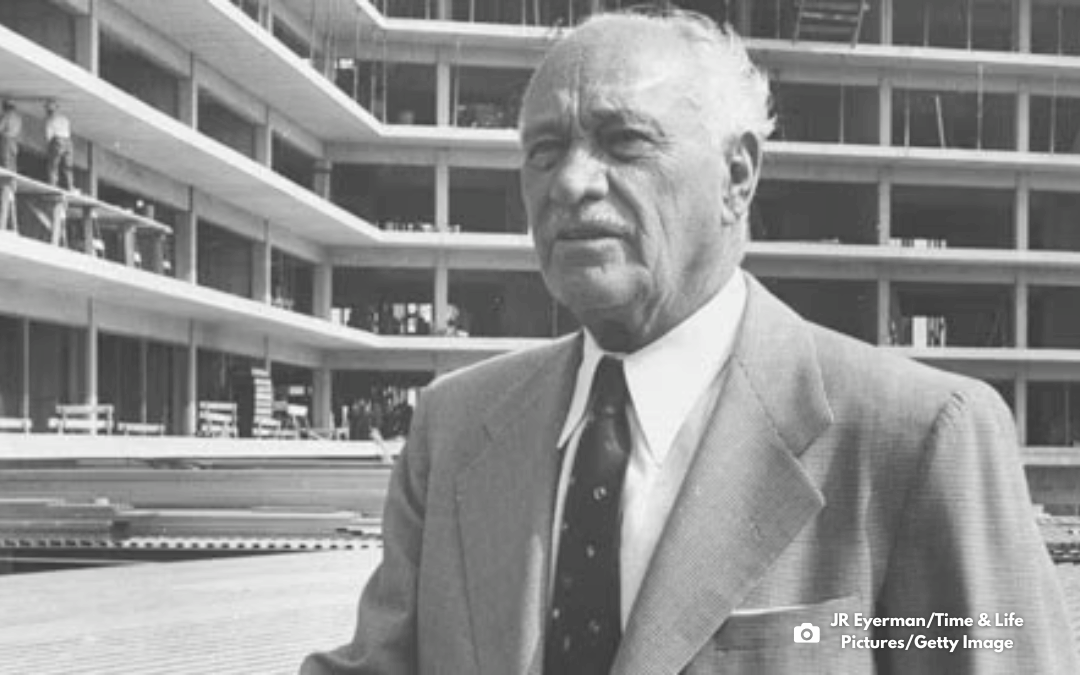
What most people don't know is that the Hilton story was not built during prosperity. It was built during hardship, uncertainty, and near-total financial collapse.
At the height of the Great Depression, Conrad Hilton found himself in a situation few could imagine. The man who dreamed of building the world's greatest hospitality company had almost nothing left. Hotels were failing, banks were calling in loans, and businesses across America were collapsing.
According to stories from that period, Hilton became so desperate that he once borrowed money from one of his own employees simply to survive another day.
Most people would have disappeared quietly after an experience like that.
Conrad Hilton did not.
Humble Beginnings on the American Frontier
Conrad Hilton was born on Christmas Day in 1887 in San Antonio, New Mexico Territory, long before New Mexico became a state.
His father, Augustus Hilton, was a Norwegian immigrant who operated a small general store. The family lived above the business while a constant stream of travellers, miners, salesmen, and cowboys passed through below.
His mother, Mary Genevieve, taught him a lesson that would shape the rest of his life: every guest deserved warmth, dignity, and respect.
Years later, Hilton would describe hospitality not as luxury, but as making people feel important.
That simple philosophy became the foundation of everything he built.
From Politics to Opportunity
As a young man, Hilton pursued several different paths. He studied mining engineering, entered local politics, and became one of the first legislators in the newly established state of New Mexico.
But politics left him frustrated.
Then World War I changed everything.
Serving as a second lieutenant in France, Hilton returned home with a renewed sense of urgency. Like many veterans, he understood how quickly life could change and became determined to seize opportunities when they appeared.
After the death of his father in a car accident, responsibility for helping support the family fell heavily upon him.
In 1919, he travelled to Cisco, Texas, intending to purchase a bank.
Instead, he bought a hotel.
Seeing Opportunity Where Others Saw Chaos
The Mobley Hotel was crowded, noisy, and chaotic.
Oil workers rented beds in shifts because demand was so intense. Rooms were occupied nearly around the clock.
Where others saw disorder, Hilton saw opportunity.
He immediately began improving efficiency, renting lobby space to small businesses and creating additional revenue streams. More importantly, he understood something revolutionary for the time:
Hotels were not simply buildings.
They were systems.
They were places where comfort, service, movement, and human interaction could be carefully managed and improved.
Throughout the 1920s, Hilton expanded rapidly across Texas, acquiring hotels in cities including Dallas, Waco, and Fort Worth.
His reputation grew alongside his ambitions.
The Great Depression Changes Everything
Then came October 1929.
The stock market crashed.
America entered the Great Depression, and Hilton's growing empire began to unravel.
Hotel occupancy dropped. Banks demanded repayment. Property values collapsed.
Many of his hotels were lost.
At times, Hilton survived on borrowed money while desperately trying to hold onto what remained of his business.
For a period, he moved from hotel room to hotel room because he no longer had a permanent home.
The hotelier had become effectively homeless.
Yet despite overwhelming pressure, he refused to surrender.
In his autobiography, Be My Guest, Hilton openly discussed the loneliness, fear, and humiliation he experienced during those years. He relied heavily on the faith inherited from his mother and continued moving forward one day at a time.
That determination would eventually change the course of hospitality history.
Building a Global Vision
As the economy recovered and World War II came to an end, Hilton recognised something many others had not yet fully understood.
The future of hospitality was international.
Air travel was about to transform the world.
Business travellers, tourists, and global commerce would increasingly connect countries and continents.
Hilton wanted his name waiting wherever those travellers arrived.
In 1946, he established Hilton Hotels Corporation.
Soon afterwards came Hilton International, helping create what would become the modern global hotel chain.
The Waldorf Astoria Dream
One of the defining moments of Hilton's career came in 1949.
Years earlier, he had looked at a photograph of New York's Waldorf Astoria and promised himself that one day he would own it.
Many would have considered the dream unrealistic.
But Hilton never forgot it.
When the opportunity finally arrived, he purchased the iconic property, turning a personal ambition into reality.
For Hilton, the acquisition represented far more than a business transaction.
It was proof that perseverance could overcome even the most difficult setbacks.
A Legacy That Changed Hospitality Forever
Conrad Hilton's influence extends far beyond hotel ownership.
He helped pioneer many concepts that modern travellers now take for granted:
- Central reservation systems
- Standardised service across multiple properties
- Airport hotels
- International hotel branding
- Consistent guest experiences across countries and continents
His vision was simple but powerful.
A traveller arriving in an unfamiliar place should still feel welcomed, comfortable, and cared for.
By the 1950s and 1960s, the Hilton name had become synonymous with modern travel itself.
Presidents stayed there.
Celebrities stayed there.
Royalty stayed there.
And Hilton became one of the most recognised business leaders in the world.
More Than a Story About Hotels
What makes Conrad Hilton's story remarkable is not the scale of the company he built.
It is the resilience he demonstrated when everything appeared lost.
His journey reminds us that success is rarely a straight line. Behind many great achievements are periods of failure, doubt, financial hardship, and personal sacrifice.
When Conrad Hilton died in 1979 at the age of 91, he left behind one of the most recognised brands on Earth.
Today, Hilton operates thousands of hotels across more than 130 countries and territories, serving millions of guests every year.
Yet perhaps the most important lesson from his life has nothing to do with hotels at all.
It is about optimism during adversity.
It is about refusing to quit when circumstances suggest you should.
And it is about understanding that true hospitality is not simply about luxury—it is about creating warmth, dignity, and welcome, even during difficult times.
That may be Conrad Hilton's greatest legacy of all.